An engagement ring can look beautiful on its own but sit awkwardly beside a wedding band. A raised diamond setting, wide shoulders or an unusual ring profile may leave an unexpected gap between the two rings. These small design details become particularly noticeable when both rings are worn every day.
A bridal set addresses that problem by considering the engagement ring and wedding band together. Lab-grown diamonds give couples another option for selecting the stones, but the quality of the finished pairing depends on much more than diamond size.
For anyone planning to wear both rings together, the relationship between their shapes, proportions and settings deserves attention before either piece is ordered.
Table of Contents
Why the Wedding Band Should Influence the Engagement Ring
Many engagement rings are selected months before the wedding band enters the conversation. That works well with certain designs, especially solitaires with settings that leave adequate room for a straight band.
Other designs require closer planning.
A low-set oval diamond, for example, may prevent a straight wedding band from sitting flush against the engagement ring. The band might need a gentle curve or a shaped opening to accommodate the centre setting.
Neither approach is inherently better. A small gap can look intentional, while a contoured band creates a more closely fitted appearance.
The practical question is whether the rings sit comfortably without pushing against delicate settings or creating unwanted pressure between stones.
Couples comparing lab diamond bridal sets can consider coordinated engagement rings and wedding bands together, rather than choosing each design separately and hoping their profiles will match.
That early comparison can prevent unnecessary alterations after the wedding.
Diamond Shape Changes the Appearance of the Entire Set
The centre diamond often determines the visual character of a bridal set.
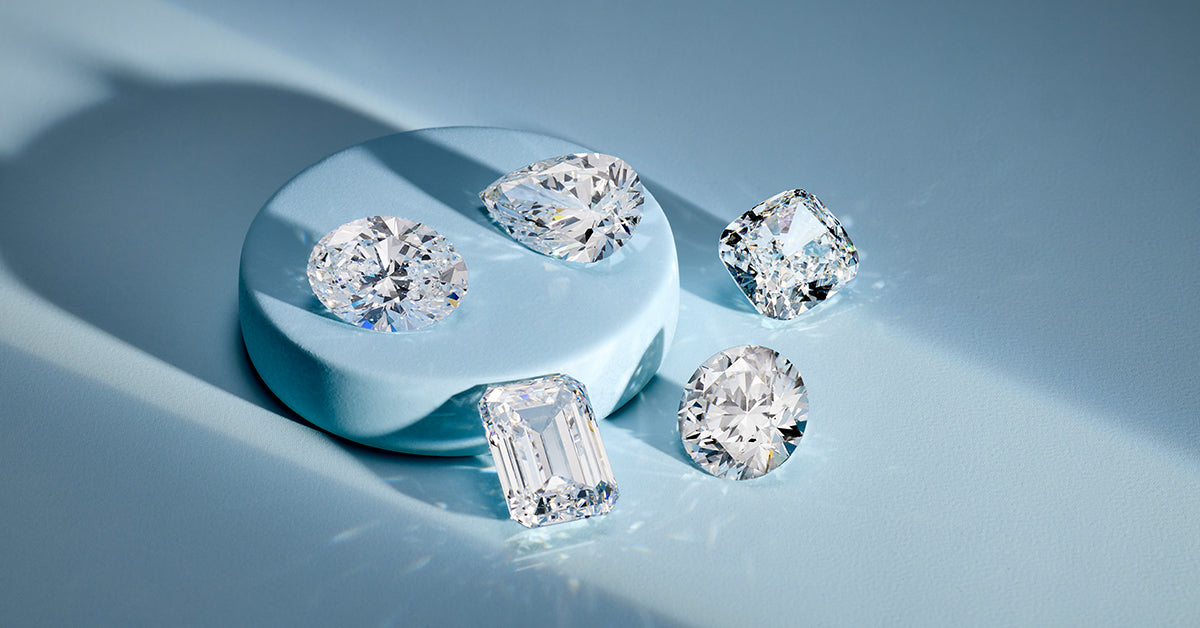
Round brilliant diamonds pair comfortably with many band styles because their symmetrical outline works with straight, curved and pavé wedding bands.
Oval diamonds create a longer appearance across the finger. Their proportions matter, particularly when the engagement ring has a narrow shank or a band with closely spaced accent stones.
Emerald cuts bring a different effect. Their step-cut facets create broad flashes of light rather than the smaller, lively reflections associated with brilliant cuts. A plain wedding band can complement this restrained appearance without competing with the centre stone.
Pear-shaped diamonds require particular attention to the position of the pointed end and the surrounding prongs. A contoured wedding band may need to follow the setting’s outline to achieve the desired fit.
The size of the centre diamond also affects the overall arrangement. A larger stone may extend over the adjacent band, making the set appear less balanced than expected.
Viewing both rings together from above and from the side reveals details that individual product photographs can miss.
Matching Metals Without Making Both Rings Identical
Platinum, yellow gold, white gold and rose gold each influence the appearance of a bridal set.
Platinum has a naturally white colour and is commonly used for engagement rings intended for regular wear. It develops a surface patina over time, although polishing can alter its appearance.
White gold achieves its pale appearance through alloy composition and, commonly, rhodium plating. That plating can wear with use and may eventually need renewing.
Yellow gold offers warmer contrast against colourless diamonds, while rose gold introduces a pinkish tone.
Matching metals creates a consistent appearance, but using two colours can also be deliberate. A yellow gold engagement ring beside a white metal wedding band, for instance, produces contrast without requiring additional gemstones.
Metal compatibility matters as well. Rings worn together rub against one another, and differing hardness, surface finishes and settings can affect their long-term appearance.
The metal’s fineness should be checked rather than assuming two rings described simply as gold will behave identically.
A Bridal Set Needs Comfortable Proportions
A ring may appear delicate in photographs while feeling noticeably different on the hand.
Band width, thickness and setting height influence daily comfort. When two rings sit together, their combined width is particularly relevant.
A narrow engagement ring paired with a much wider wedding band can create a pronounced contrast. This may be desirable, but the thicker band can also affect how the rings feel around the finger.
Pavé Bands and Everyday Contact
Pavé wedding bands introduce additional sparkle through small diamonds set along the metal surface.
Their appearance depends on stone spacing, setting style and the quality of the surrounding metalwork.
Small stones require secure settings, especially when the band will be worn regularly. Very fine prongs may create a delicate look but can require closer maintenance and inspection.
A plain wedding band generally has fewer exposed stone settings and may suit someone who frequently works with their hands.
Flush-Fitting Versus Open-Gap Designs
A flush-fitting bridal set creates a continuous visual outline. This is particularly appealing when the engagement ring has decorative shoulders or a matching wedding band.
An open-gap arrangement allows the rings to retain more individual character.
Neither arrangement guarantees greater comfort. The undersides of the rings, finger coverage and interaction between their settings matter more than the absence of a visible gap.
Understanding Lab-Grown Diamond Quality
Laboratory-grown diamonds have the same essential chemical composition and crystal structure as natural diamonds. Their origin differs, but they are diamonds rather than substitutes such as cubic zirconia.
The centre diamond should still be evaluated for its individual appearance and quality.
Cut and proportions affect how light travels through the stone. A well-proportioned diamond can appear livelier than a heavier stone with less favourable proportions.
Clarity also deserves a practical assessment. Rather than automatically seeking the highest lab created diamonds grade, buyers can examine whether inclusions are noticeable without magnification and whether they affect the stone’s appearance.
Colour preferences often depend on the diamond shape and selected metal.
Independent documentation provides useful information about a stone’s origin and characteristics. The International Gemological Institute (IGI), for example, provides laboratory-grown diamond reports covering measurements and the traditional four Cs.
The Gemological Institute of America (GIA) uses Premium and Standard quality classifications for eligible colourless to near-colourless laboratory-grown diamonds under its newer assessment system.
Buyers should examine which laboratory issued the document and what its particular report actually records.
A grading report describes the diamond. It does not independently guarantee the craftsmanship or long-term security of the finished ring.
Planning the Set Before the Wedding Date
Customisation becomes especially useful when the engagement ring has an unusual setting.
A jeweller can assess the height of the centre stone, the shoulders of the engagement ring and the space required by the wedding band. These measurements help determine whether a straight, curved or individually shaped band is appropriate.
UK buyers ordering online should also confirm how the seller handles ring sizing, resizing eligibility, delivery times and returns on customised jewellery.
If the rings are intended to be worn together permanently, they should be tried on together before the wedding wherever possible. Sizing two rings independently does not always reproduce the same fit once both are on the finger.
The overall width can change how snugly they sit.
The Details Worth Confirming Before Ordering
Before approving a bridal set, ask the jeweller to confirm the finished width of each band and how the rings will meet when worn together.
Check whether the wedding band’s diamonds could rub against the engagement ring’s prongs or gallery. Repeated contact in the wrong place may create avoidable wear.
For a pavé band, establish whether resizing is possible without disturbing the smaller stones. Some designs offer limited flexibility because diamonds occupy much of the circumference.
It is also sensible to confirm the metal fineness, the centre stone’s grading documentation and the availability of future cleaning or setting inspections.
A well-planned bridal set should look balanced from every angle, allow both rings to sit securely and remain comfortable through ordinary daily movement. Those characteristics are established through proportions, setting design and careful workmanship, not simply by matching the diamond shapes.